
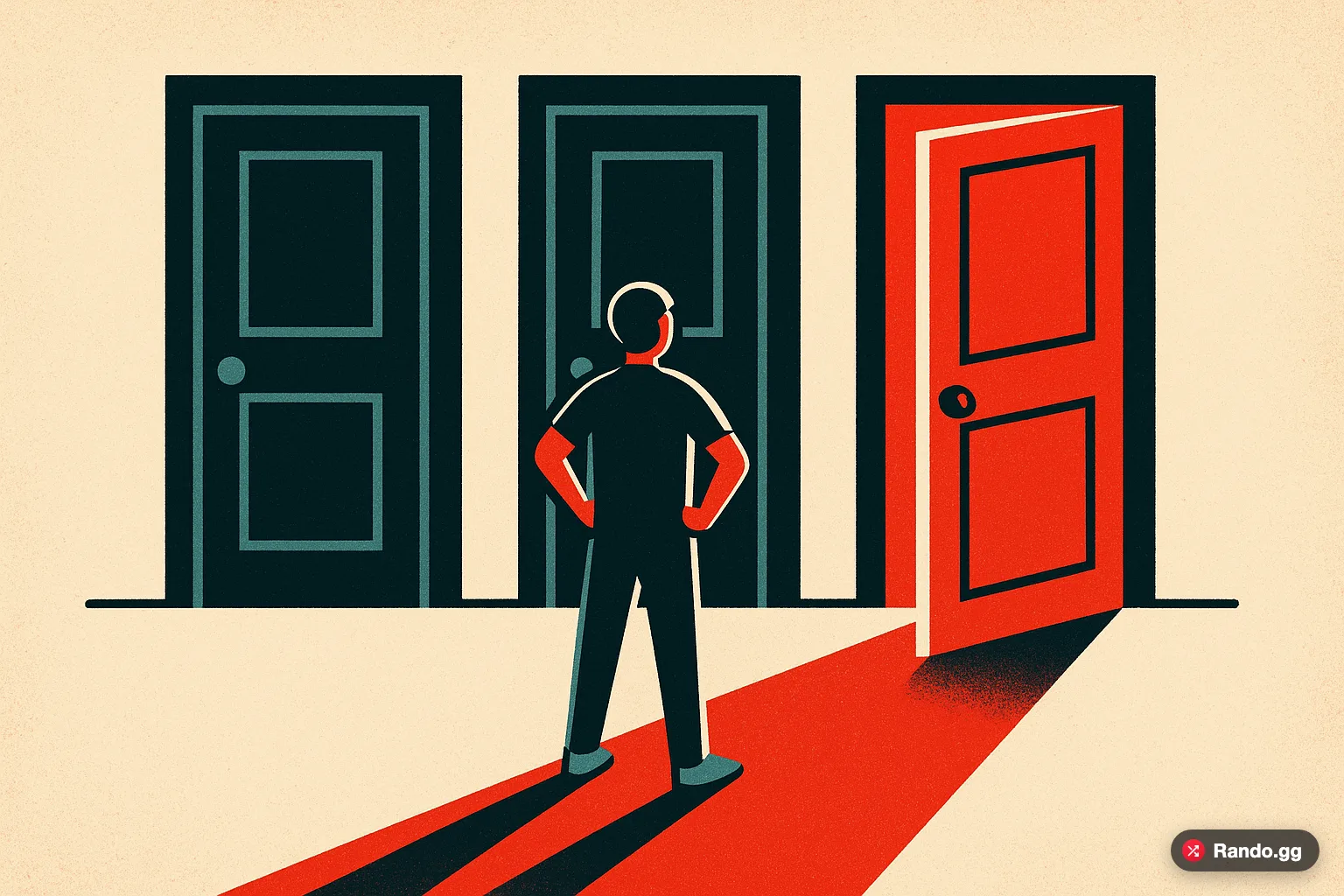
There is no shortage of free games. There is a shortage of willingness to evaluate the four hundredth thumbnail on a grid. The failure mode of every game portal is that browsing it is less fun than the games on it.
Why choosing is the hard part
A grid of games asks you to predict which one you will enjoy, from a thumbnail and a title, before you have played any of them. That is a genuinely hard prediction and it is not enjoyable to make. Most people scroll for a while and then close the tab.
Removing the decision removes the problem. A game chosen at random costs you nothing to reject and requires no evaluation up front.
The ninety second rule
Give a game ninety seconds. If you are still playing after that, you found something. If you are not, press shuffle. The cost of a bad pick is ninety seconds, which is far less than the five minutes you would otherwise spend browsing.
Our own session data backs this up. Most sessions are short, because sampling is the behaviour. The games people actually stay on hold them for minutes, and there is no way to predict which those will be from the outside.
What to look for in five minutes
- Games that start instantly. A loading bar eats the time you have.
- One-button or mouse-only games, so there is nothing to learn.
- A visible score, which gives you a reason to try once more.
- No account, no tutorial, no cutscene.
What to avoid
Anything with a thirty second unskippable video before it starts. In five minutes that is ten percent of your time spent on an advert, and games that open with one usually interrupt you again later.
Ten games that start instantly
The test for a five-minute game is how long it takes to reach the first meaningful input. Everything below starts in seconds and needs no explanation.
Flip Bros
Instant start, one input, immediate feedback. The most played game we have.
Tunnel Rush
Pure reaction. A run lasts seconds, so five minutes is many attempts rather than one.
Swingo
One button, a visible score, and no reason to stop at any particular point.
Draw Climber
Novel enough to hold attention immediately, with no tutorial to sit through.
Crazy Cars
Short loop, quick restart. Failing is cheap, which is what makes it repeatable.
Perfect Slice
Satisfying single action with no timer, so it suits an interrupted five minutes.
Tetris
The default answer for a reason. No learning curve for most people and no natural stopping point.
Pacman
Familiar, instant, and finishes on its own terms rather than yours.
Paku Paku
Tiny and fast to load, which matters more than it sounds when you have five minutes.
Escape Road
Chase loop with a single control. Easy to pick up mid-thought.
Why a shuffle button beats a grid
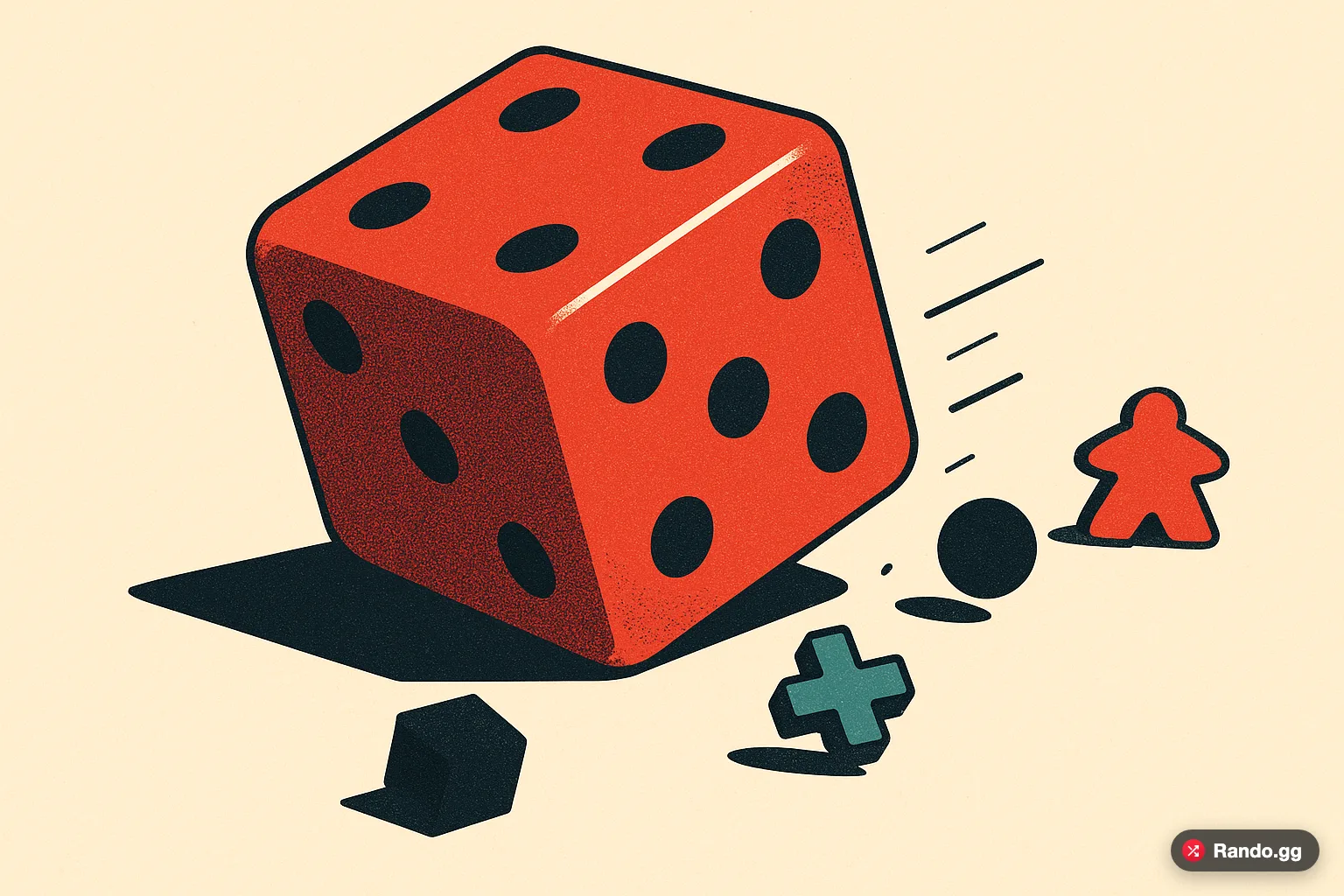
A grid asks you to predict enjoyment from a thumbnail. That prediction is unreliable and unpleasant to make, and making it four hundred times is worse than playing almost anything. Randomness removes the prediction entirely: you are not choosing badly, you are sampling.
It also changes what a bad pick costs. On a grid, a bad pick feels like a wasted decision. On a shuffle, it costs one button press, which is why people who shuffle end up playing more and browsing less.